Rogier Stone Oven
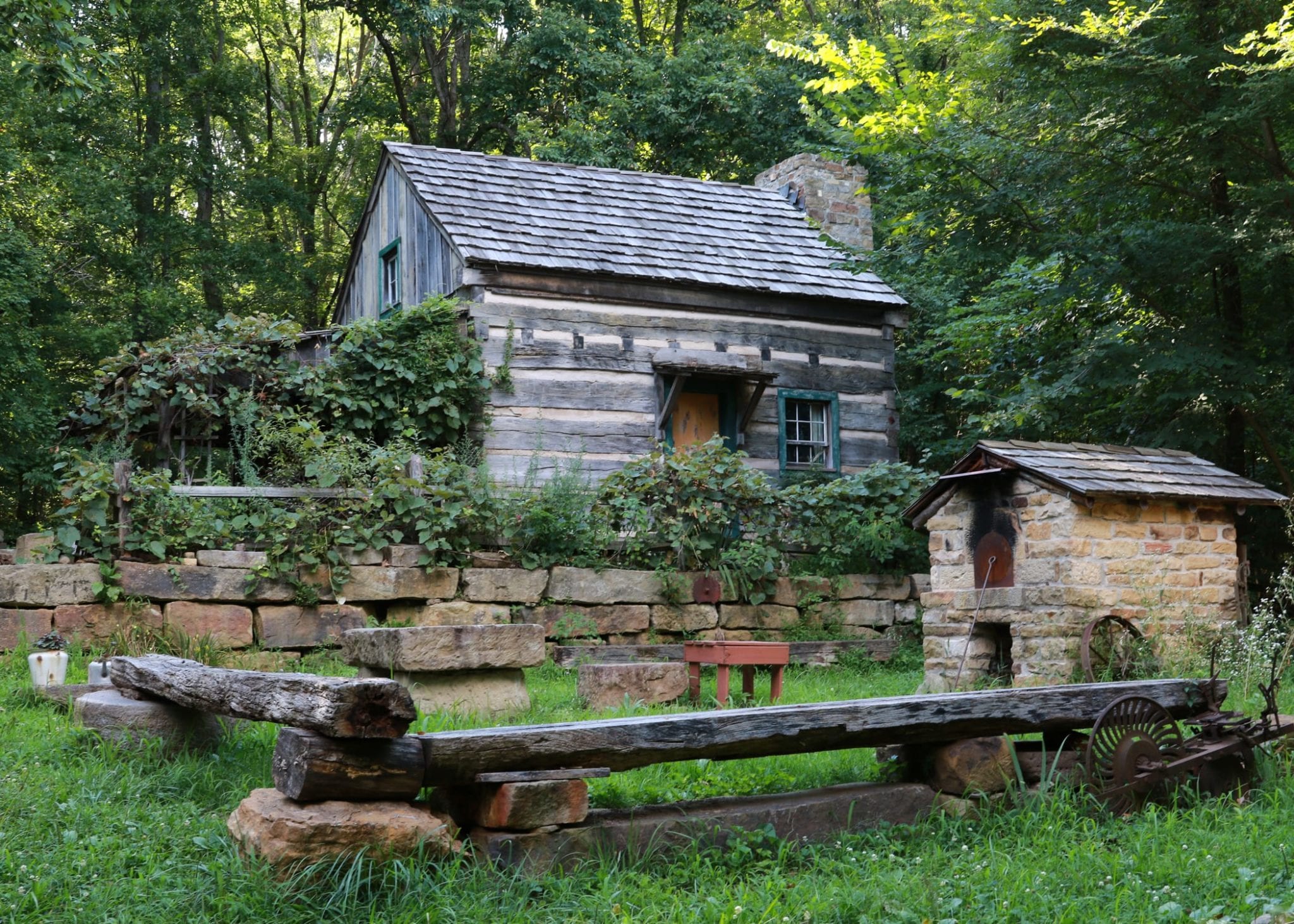
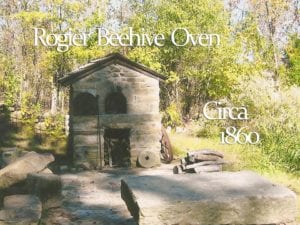
When the Rogier beehive oven was built shortly after the Civil War, little did its builders know the oven would be cherished and their work appreciated well into the next century. The oven was built by a group of stone masons headed by Nick George shortly after Lambert Rogier returned home to the family farm after the Civil War, family historian Evelyn Lasley said. The oven was donated to the village by the new landowners, Evelyn and Roy Lasley.
Lambert Rogier and his wife, Mary Harbarville, immigrated from Belgium about 1850 and settled on a farm near Bandon where they raised six children. They brought with them Belgian Farming methods and the Belgian technology for building an outdoor bread oven of the type used in their homeland. The oven is of the true “bee-hive” style, having an interior core of hand-made bricks laid up with clay inside the stone exterior. Its domed, round shape reminded its builders of the shape of old-fashioned wicker beehives.
Marshall Terry donated two days’ time to grade and level the site for the oven and the Carter Cabin. The oven was dismantled in 2005 and moved to the village by Bob Ramsbottom, Lee Litherland, Rodeny Covey, Gary Dauby and village developer Chuck Poehlin. It was rebuilt to working condition by the Marty Backer family and Poehlin.
“There was very little left of the interior,” Poehlin said, “the soft bricks and clay had fairly melted away and we didn’t have a clue how to rebuild the inside. Jana Faith went online and found complete plans for rebuilding the interior of a Belgian oven. She saved the day” The original oven rested on a foundation of two layers of large stones. The new oven is on a concrete foundation. The late Bob Rutherford helped get the project started.
The oven was dedicated in October of 2005 in memory of Mr. and Mrs. Lambert Rogier, Xavier Rogier, Eugene & Mary Delaisse Rogier and Clarence & Willie Rogier, who were “true Belgian pioneers, yet truly American in their spirit and loyalty to their country.”
The late former Governor of Indiana, Edgar Whitcomb, delivered the address at the October 1 dedication. “In this time, we think very little about the production of bread – we just go to the store and buy it.