Blacksmith shop
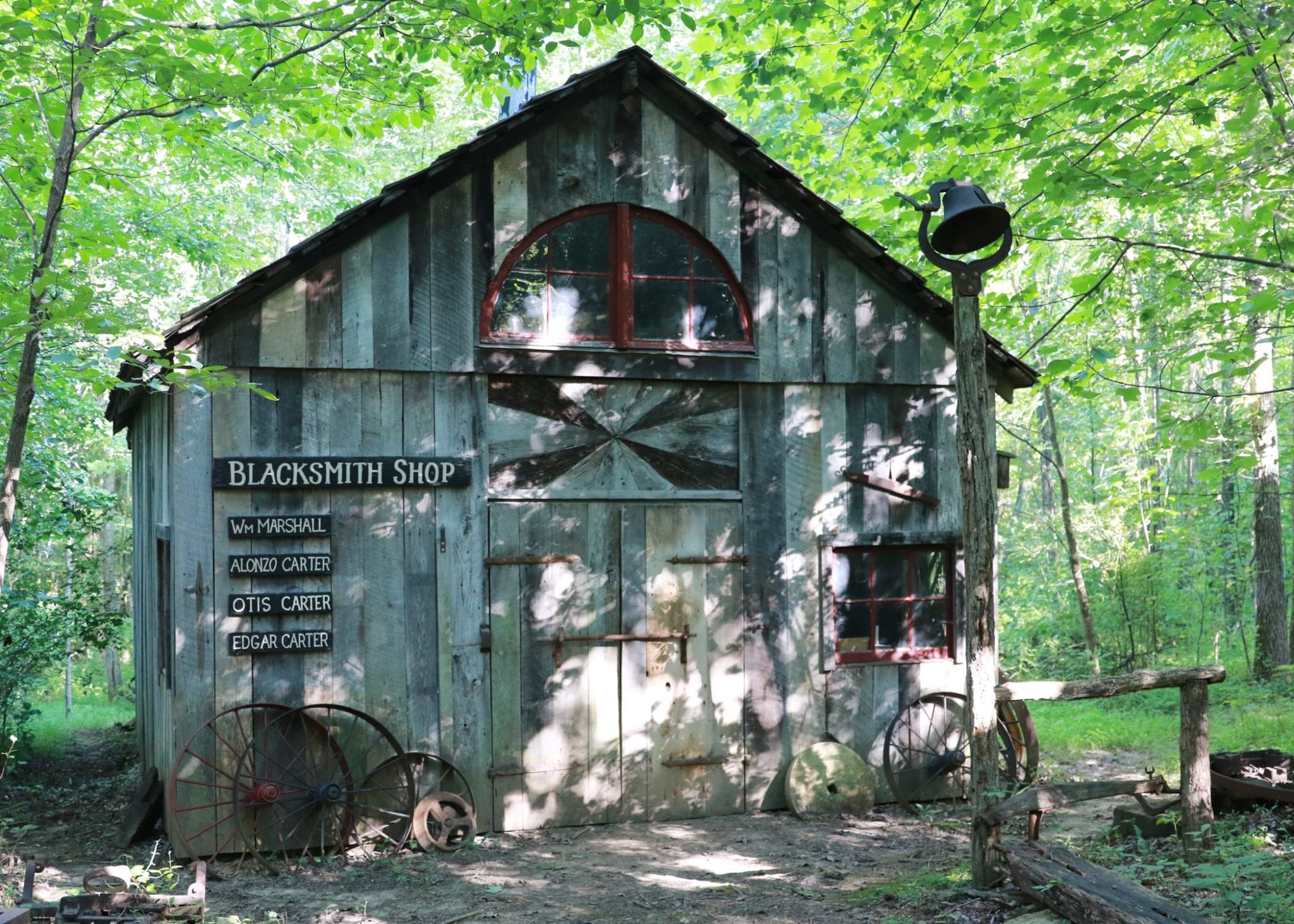
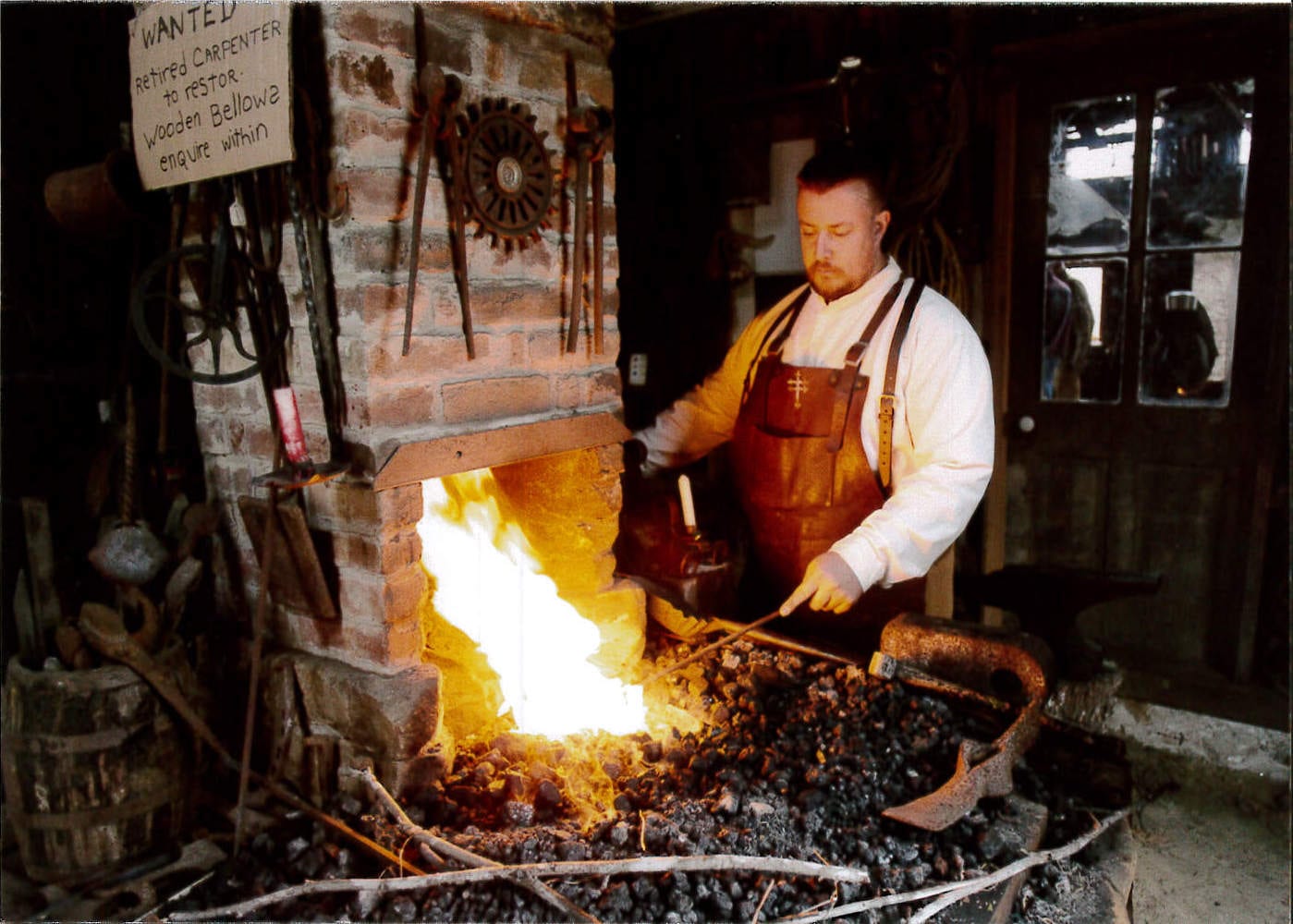
This forge of massive stones with a brick chimney, is believed to have been built by William Marshall, about the time of the Civil War. Marshall was the original owner of a farm located between the forks of Gerald and Deer Creek Roads in the Gerald community. The farm was later sold to Alonzo Carter and later still, was passed on to his son, Otis Carter and the to his son, Edgar. The forge was in use by all three Carter’s probably Marshall as well.
Alonzo Carter used the forge all of his life to maintain his farming operations, as did his son Otis. Edgar Carter was a skilled mechanic, blacksmith and farmer. He helped organize and maintain the first telephone line in the Deer Creek community. After Edgar’s death in 2007, his farm was subdivided and sold to different purchasers. The land on which the blacksmith shop was located, was bought by a distant relative of Edgar’s- Mathew Carter. Mathew agreed to let the forge be removed and relocated to the Shubael Little Village, where it was rebuilt to working condition.
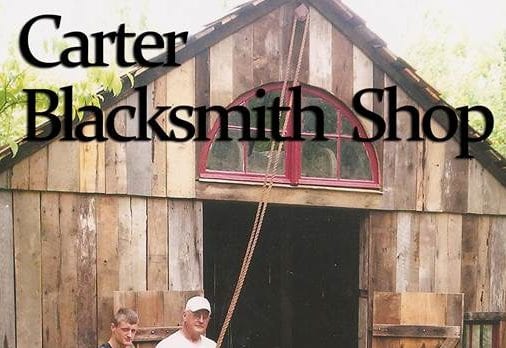
Lovell Carter, his grandson Justin Brown and Village developer Chuck Poehlein took down the chimney, removed the stone forge and rebuilt it in the summer of 2010. A new blacksmith shop of recycled barn lumber was built to house the forge. The new shop dimensions are based on those of the original.
Pioneer America could not have developed without its blacksmiths. While the Industrial Revolution was getting a foothold in America, local blacksmiths were providing the tools, utensils and machinery repairs that farmers and ordinary citizens needed to survive. Like the early gristmills that dotted the countryside, the blacksmith shop were often the locus of the community.
In addition to being a blacksmith and farmer, Alonzo Carter was also a Justice of the Peace and settled minor court cases in his home. In addition to being a blacksmith and a farmer, his son Edgar Carter was a gifted engineer who attended Diesel Mechanic’s school in St. Louis as a young man. Edgar helped organize the first telephone service on Deer Creek and maintained the Clyde Exchange line for many years.
Visitors to the Village now have the unique opportunity of seeing the only surviving stone and brick forge in Perry County and see it in action at the annual Open House in October. Like the vintage cabins and other exhibits in the Village, the Marshall – Carter Forge is a reminder of the way of life that has all but disappeared. It will be preserved for future generations to appreciate and enjoy.
Chuck Poehlein